
Ni-MH AA400mAh 1.2V Rechargeable Battery turnover time:2026-08-18 number of clicks:540次
1.Battery type and category(e.g. portable, industrial, electric vehicle, LMT, or SLI battery).
Portable Battery
2. Manufacturer's name and contact details
Manufacturer / Supplier:HUIXIAN SUNRISE POWER SOURCE CO.,LTD.
Full address:West Suokelou, Huqiao, Huixian City Henan China
Phone number:15736948889
Email:xinzhou@xuridianyuan.com
Website:www.xuridy.com
3. Chemistry:Ni-MH (Nickel-Metal Hydride)
4. Date of Manufacture:SEE BATTERY
5. Nominal capacity and voltage
Electrical specifications of the battery.
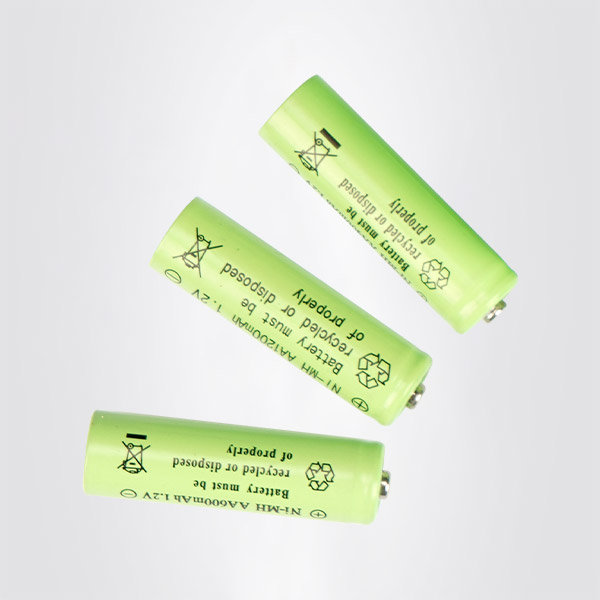
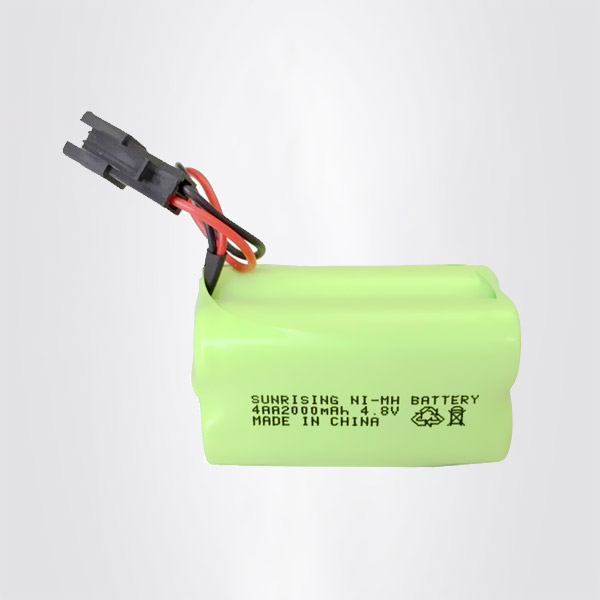
AA400mAh 1,2V 10.5g±0.5g
6. Chemical composition
Including lithium, nickel, cobalt, lead, etc
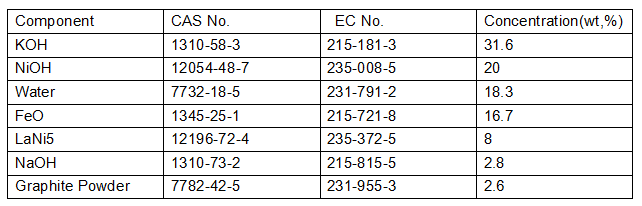
KOH, NiOH, Water, FeO. LaNi5, NaOH, Graphite powder,
Cadmium (Cd) content: < 0.002% / Lead (Pb) content: < 0.004%
Critical raw materials contained:
Nickel (battery grade); Light rare earth elements (Lanthanum); Graphite
7.The hazardous substances present in the battery, other than mercury,cadmium or lead:
Nickel hydroxide (NiOH); Potassium hydroxide (KOH); Sodium hydroxide (NaOH)
8.Critical raw materials present in the battery (If concentration is more than 0,1% weight by weight):
9.Suitable extinguishing media: Water spray, carbon dioxide, dry chemical, foam
10.EU Declaration of Conformity


11.Information on Prevention and Management of Waste Rechargeable Ni-MH Batteries

Article 74(1)(a) – Role of end-users in waste prevention
Use the rechargeable battery in accordance with the manufacturer’s instructions. Use a suitable charger, observe the correct polarity and recommended charging conditions, and avoid overcharging, deep discharge, short-circuiting, excessive heat, moisture and mechanical damage. Proper use and storage can extend the service life of the battery and reduce waste.
Where technically and safely possible, batteries should be re-used. Preparation for re-use, preparation for repurposing, repurposing or remanufacturing should only be carried out by appropriately qualified operators where applicable to the battery concerned.
Article 74(1)(b) – Role of end-users in separate collection
Waste batteries must be collected separately from other waste streams and must not be discarded with unsorted municipal or household waste. End-users should return spent batteries to designated separate collection systems so that they can be properly treated and recycled.
Article 74(1)(c) – Separate collection, take-back and treatment
Waste portable batteries may be returned to appropriate battery take-back or collection points, including collection facilities made available by distributors, producer responsibility systems or municipal collection systems, as applicable in the Member State concerned. Collected batteries are to be sent for permitted treatment and recycling. Re-use or preparation for re-use should only take place where the battery is suitable and can be handled safely.
Article 74(1)(d) – Safety instructions for waste batteries
Do not short-circuit, crush, puncture, dismantle, deform, heat, burn or expose the battery to fire. Keep waste batteries away from children and from conductive metal objects. Do not directly solder the battery terminals.
If a battery is damaged or leaking, avoid contact with the internal materials and electrolyte. Use suitable protective gloves and eye protection when handling a leaking battery. Avoid inhalation of vapours and prevent released material from entering drains, soil or waterways. Store damaged or leaking batteries safely and hand them over to an appropriate collection or waste-management facility.
Article 74(1)(e) – Meaning of labels and symbols
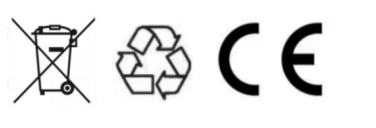
The crossed-out wheeled-bin symbol means that the battery must not be discarded with unsorted municipal waste and must be collected separately. Any other labels, chemical symbols or markings appearing on the battery, its packaging or accompanying documentation must be observed in accordance with the applicable requirements of Regulation (EU) 2023/1542.
Article 74(1)(f) – Impact of substances on the environment, human health and safety
This Ni-MH battery contains, according to the supplied MSDS, nickel hydroxide (NiOH), potassium hydroxide (KOH), sodium hydroxide (NaOH), LaNi5, iron oxide, water and graphite. In normal use the battery is sealed and exposure to its internal components is not expected.
If the battery is damaged or opened, the alkaline electrolyte may leak. Potassium hydroxide and sodium hydroxide can cause serious corrosive effects on skin and eyes. Nickel-containing materials may present health hazards if released or improperly handled. Battery materials released into the environment may adversely affect soil or water.
Waste batteries must therefore not be littered, burned or discarded with unsorted municipal waste. Proper separate collection and recycling help prevent releases of hazardous substances and support the recovery of valuable materials.
Material information for this battery

Note: This document is drafted for the Ni-MH AA400mAh battery on the basis of the supplied manufacturer datasheet/MSDS. Collection-point arrangements and any additional national information should be adapted to the Member State in which the battery is supplied.
 Yugong net anbei 41078202000175